Lion's Mane Mushroom for Dogs & Cats
Lion's Mane at a glance
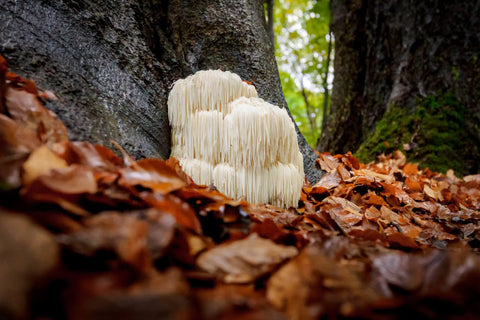
What it is: Hericium erinaceus, a white, shaggy functional mushroom used for centuries in traditional Chinese medicine and now studied for its effects on the nervous system.
Why pets take it: Supports healthy cognitive function, nerve health, and a calm, alert state of mind. Most often used for senior dogs and cats.
The active compounds: Hericenones (fruiting body) and erinacines (mycelium). Both interact with nerve growth factor, or NGF, a protein that supports the growth and maintenance of neurons.
Best form for pets: A triple-extracted powder or liquid tincture using both fruiting body and mycelium. Whole raw mushroom is poorly digested by dogs and cats.
Typical use: Daily, with food. Start low and build to the full serving over several days.
Found in: All four Earth Buddy mushroom products.

What Is Lion's Mane Mushroom?
Lion's Mane (Hericium erinaceus) is a large, white, shaggy mushroom that grows in cascading spines rather than the cap-and-stem shape most people picture. It has been used for both culinary and medicinal purposes across Asia for centuries, and it can be eaten raw, cooked, dried, or steeped as tea. Most people describe the flavor as close to seafood.
It belongs to a category often called nootropic or functional mushrooms, meaning mushrooms studied for their effect on cognition and the nervous system rather than just nutrition. Lion's Mane contains antioxidants, beta-glucans, and a set of bioactive compounds that are unusual among mushrooms in how directly they interact with nerve tissue.
Often consumed fresh, dried, in tea or supplement form; Lion’s Mane mushrooms for dogs and cats are best offered in a powdered supplement and/or liquid tincture form. When seeking out Lion’s Mane mushrooms for dogs and cats, it is best to find a pet supplement that uses the full spectrum of bioactive compounds in both fruiting body and mycelium. Both fruiting body and mycelium will have a variety of immunologically active compounds that can support pet health and wellness.
Lion’s Mane mushroom benefits for dogs are primarily attributed to supporting overall cognitive health, but at Earth Buddy we believe the benefits extend beyond cognition into helping with stress and mood. There have also been studies showing the neuroprotective benefits of Lion’s mane often related to oxidative stress. Functional Mushrooms for dogs and cats, in general, may help fight free radicals that cause oxidative stress, but of all the mushrooms Lion’s Mane has shown to have a higher amount of antioxidants than most.

How Lion's Mane Is Grown for Pet Supplements
Wild Lion's Mane grows on hardwoods, usually oak and beech, in late summer and fall. It is uncommon enough in the wild that virtually every supplement on the market uses cultivated material.
How it's cultivated changes what ends up in the jar. Fruiting bodies are grown on supplemented hardwood sawdust. Mycelium is grown on grain or on sterilized substrate in liquid culture. Earth Buddy's mushrooms are grown by mycologists in the USA on organic millet, rye berries, and oak, depending on the species, and are USDA Organic certified. The substrate matters because it determines whether the finished material is concentrated mushroom compounds or mostly leftover grain.
Hericenones and Erinacines: The Active Compounds in Lion's Mane
Two families of compounds do most of the work in Lion's Mane, and they live in different parts of the organism. This single fact drives most of the confusion in the Lion's Mane supplement market.
Hericenones are found predominantly in the fruiting body, the visible mushroom above ground.
Erinacines are a group of terpenoids found predominantly in the mycelium, the root-like network below. To date they have only been identified in the mycelium.
Both interact with NGF, but not equally. Clinical research indicates hericenones show limited NGF stimulation, while erinacines show strong activation. Erinacine A specifically has been shown to cross the blood-brain barrier.
| Fruiting Body | Mycelium | |
|---|---|---|
| What it is | The visible mushroom above ground | The root-like network below ground |
| Signature compounds | Hericenones | Erinacines (including Erinacine A) |
| NGF activity | Limited stimulation in published research | Strong activation in published research |
| Blood-brain barrier | Not established | Erinacine A shown to cross it |
| Beta-glucan content | Higher concentration | Lower concentration |
| Also contributes | Antioxidants, structural polysaccharides | Broader metabolic compound profile |
| In Earth Buddy products | Yes | Yes |
Numerous studies have looked into the potential benefits of Lion’s Mane mushrooms and its ability to stimulate the growth of neurons. Cognitive decline in pets is often overlooked and downplayed, but this decline can be mitigated through holistic measures like Lion’s Mane supplements. Sundowners is a common trait of older pets, where older dogs and cats begin to lose track of wake and sleep cycles. This can be quite a confusing and frustrating experience for both pet owners and the pet, as they will often wander in the middle of the night not realizing it is a time for rest.
How to Use Lion's Mane for Dogs & Cats
Lion's Mane is a daily supplement, not a situational one. The compounds work by supporting an ongoing process, so consistency matters more than any single serving. Give it with food. Most pets accept the powder mixed into a meal without noticing.
Lion's Mane Dosage for Dogs & Cats
Dosing depends on the format and the concentration of the extract, which varies widely between brands. Always follow the label on the product you are using rather than a general rule from a search result.
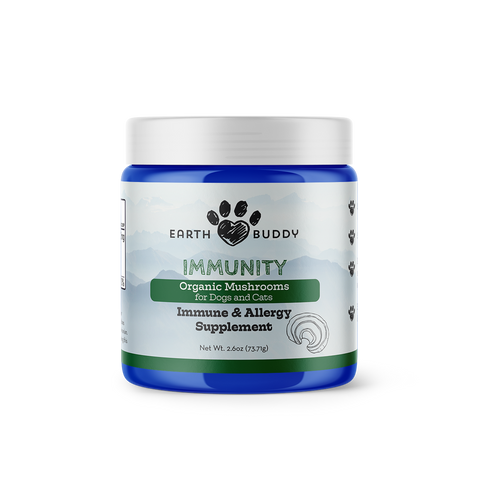
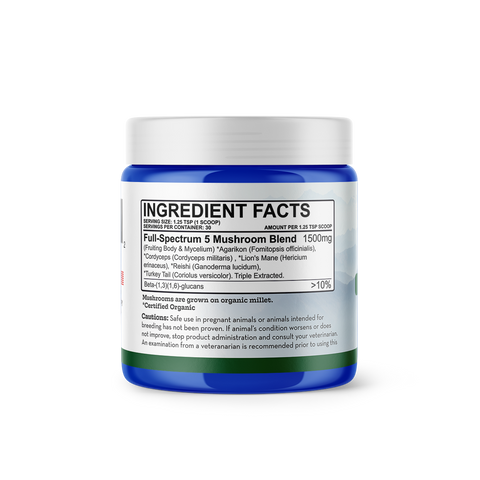
For Earth Buddy's Immunity mushroom powder, one 1.25 tsp scoop delivers 1500mg of the five-species blend at greater than 10% beta-glucans. Start with one third to one half scoop, one to two times per day, then build to the full serving over several days.
Start low and go slow. This is the single most useful dosing habit with any functional mushroom. It gives the digestive system time to adjust and makes it easy to see what a change actually does.
| Pet weight | Starting serving | Daily serving | Best alternate format |
|---|---|---|---|
| Cats and pets under 15 lbs | 1/4 scoop once daily | 1/3 scoop once daily | Immune Tincture |
| 15 to 40 lbs | 1/3 scoop once daily | 1/2 scoop once daily | Focus+Immune 5mg |
| 40 to 75 lbs | 1/2 scoop once daily | 1/2 to 1 scoop daily | Focus+Immune 5mg or 10mg |
| 75 lbs and up | 1/2 scoop twice daily | 1 scoop, 1 to 2 times daily | Focus+Immune 10mg |
One scoop equals 1.25 tsp of Immunity Organic Mushrooms, delivering 1500mg of the five-species blend at greater than 10% beta-glucans. Always give with food. If your pet is on prescription medication or has a diagnosed condition, talk to your veterinarian before starting.

How Long Does Lion's Mane Take to Work in Dogs?
Functional mushrooms are cumulative. Unlike a calming product where the effect is same-day, Lion's Mane works by supporting an ongoing biological process, and that takes time to show up as behavior.
Give it 30 days of consistent daily use before drawing any conclusion, and 60 to 90 days for the fuller picture. Cognitive support in particular is measured in what does not change: a senior dog who stays oriented, keeps a normal sleep and wake rhythm, and stays engaged with the household.
Write down what you notice at the start. Sleep timing, recognition of familiar people, response to their name, willingness to engage. Memory is generous with slow change, and notes are not.

Powder, Capsule, or Tincture: Which Format?
Format is about the pet, not the potency. All three deliver the same extract.
Powder is the most flexible. Easy to scale the serving up or down, mixes into wet or dry food, and the mild flavor works for most pets. Best choice for cats and for anyone who wants fine control over the amount.
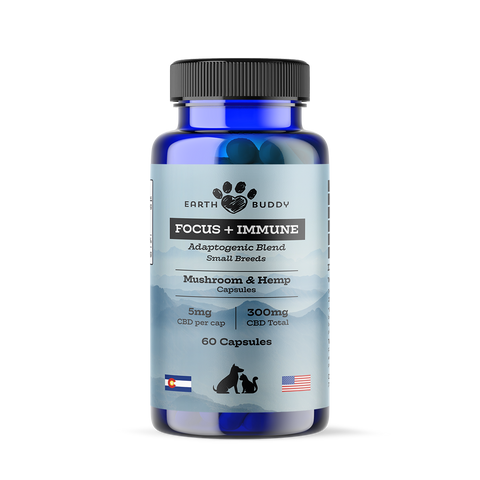
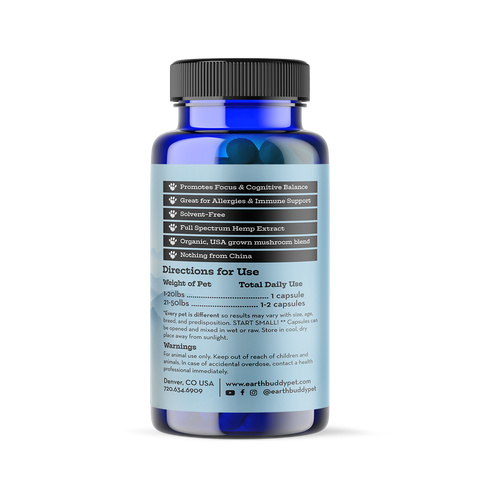
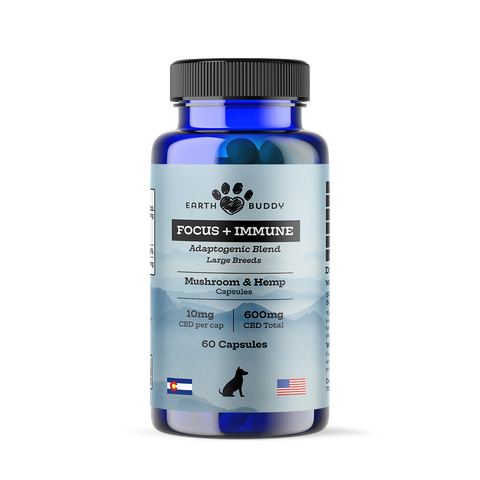
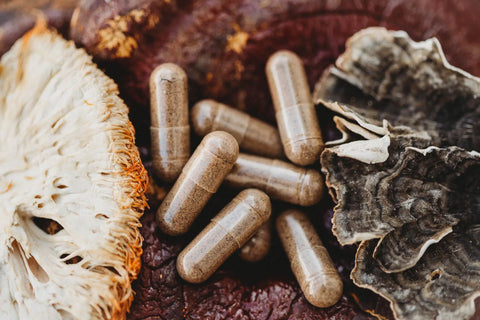
Capsules are the cleanest option for dogs who take pills easily and for anyone who wants a fixed dose with no measuring. Earth Buddy's Focus+Immune capsules also carry solventless CBD Kief alongside the mushrooms.
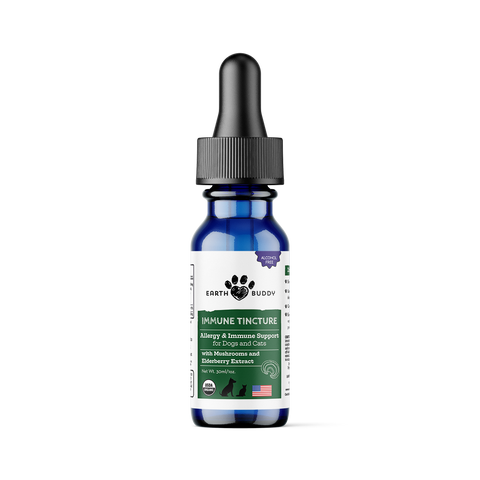
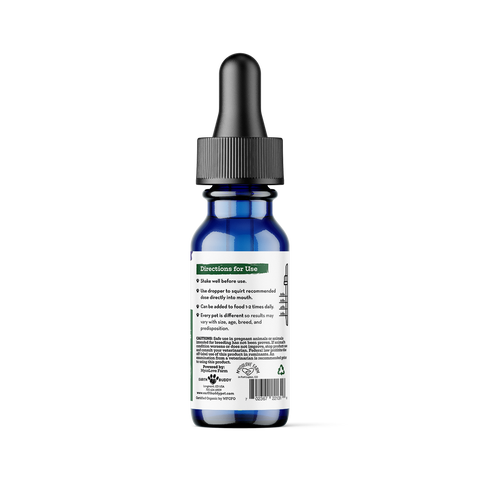
Tincture is the easiest to dose for cats, very small dogs, and picky eaters, since it can go directly in the mouth or over food.
Is Lion's Mane Safe for Dogs & Cats?
Yes. Lion's Mane has a long safety record in both human and animal research, and it is not a mushroom with toxicity concerns for dogs or cats.
The most common thing pet parents notice when starting is mild digestive adjustment: softer stool for a few days, occasionally a skipped meal. This usually resolves on its own and is the reason for the start-low approach. If it does not settle within a week, stop and check with your veterinarian.
A few situations call for a conversation with your vet first. Pets that are pregnant or nursing should not take it. Pets on prescription medication, especially immune-modulating drugs, should be cleared first. And pets with a diagnosed condition should always have their vet in the loop on any new supplement.
One important distinction: none of this applies to wild mushrooms. Lion's Mane sold as a pet supplement is cultivated, identified, and lab-tested. Wild mushrooms your dog finds in the yard are a completely different matter, and some species are genuinely dangerous. Never let a dog eat an unidentified mushroom.
How to Choose a Lion's Mane Supplement for Pets
Once you decide to add functional mushrooms to your pet's routine, the labels get confusing fast. Fruiting body or mycelium, powder or extract, organic or not. Three things separate a supplement that does something from one that does not.


Lion's Mane in Earth Buddy's 5-Mushroom Blend
Lion's Mane appears in all four Earth Buddy mushroom products, alongside Agarikon, Cordyceps, Reishi, and Turkey Tail. It is in every one of them for the same reason we use full spectrum hemp instead of isolate: each species works a different pathway, and the combination covers more ground than any single mushroom can.
Here is what each one brings.
| Mushroom | Primary contribution |
|---|---|
| Lion's Mane (Hericium erinaceus) | Cognitive function, nerve health, calm focus |
| Reishi (Ganoderma lucidum) | Adaptogenic, supports normal histamine levels and immune homeostasis |
| Turkey Tail (Trametes versicolor) | Beta-glucan rich, digestive and antioxidant support |
| Cordyceps (Cordyceps militaris) | Healthy inflammatory response, physical stress adaptation |
| Agarikon (Fomitopsis officinalis) | Natural immune response, antioxidant rich |
All five are USDA Organic, sourced from mycologists in the USA, grown on organic millet, rye berries, and oak. Fruiting body and mycelium, triple extracted, freeze dried, and third-party tested every batch.
Lion's Mane for Dogs & Cats: Frequently Asked Questions
It depends on the concentration of the product, so follow the label. With Earth Buddy's Immunity mushroom powder, start with one third to one half of the 1.25 tsp scoop once or twice daily and build to the full serving over several days. Larger dogs need more; cats and small dogs need less. Always give with food.
Yes. Lion's Mane is safe for cats and the same five-species blend is used in Earth Buddy's cat and dog products. Format matters more for cats than dose does. A liquid tincture or a powder mixed into wet food is far easier than trying to give a capsule.
Plan on 30 days of consistent daily use before evaluating, and 60 to 90 days for the fuller picture. Functional mushrooms are cumulative rather than same-day. Keeping brief written notes at the start makes the change much easier to see.
Yes. It has a long safety record and is not associated with toxicity in dogs or cats. Some pets have mild digestive adjustment in the first week, which is why starting with a partial serving is worth doing. Pets that are pregnant or nursing should not take it, and pets on prescription medication should be cleared by a veterinarian first.
No. Lion's Mane is not a sedative. Most pet parents describe the effect as alert and settled rather than drowsy. For nighttime restlessness specifically, Sleep Support with CBN and CBD is the better tool.
Neither on its own. Lion's Mane is the strongest example in the whole category of why both matter. Hericenones are in the fruiting body, erinacines are only in the mycelium, and erinacines show stronger nerve growth factor activity in published research. A supplement using only one part is missing compounds the other one has.
Culinary Lion's Mane is not harmful, but dogs and cats do not digest chitin well, so most of the useful compounds pass straight through. An extracted supplement concentrates those compounds into a form the body can actually use.
Yes, and they are often used together. Earth Buddy's Focus+Immune capsules combine the five-mushroom blend with solventless CBD Kief in a single capsule for exactly that reason.
Cognitive support is most commonly started around age seven, and earlier for large and giant breeds since they age faster. There is no age restriction on daily use in healthy adult pets, and many pet parents start earlier as general maintenance.
Lion’s Mane Research & Studies
- → Neuroprotective Metabolites of Hericium erinaceus Promote Neuro-Healthy Aging
- → Erinacine A-enriched Hericium erinaceus Mycelium Ameliorates Alzheimer’s-related Pathologies in Transgenic Mice
- → Neurotrophic Properties of the Lion’s Mane Medicinal Mushroom, Hericium erinaceus
- → Lion’s Mane Suppresses Oxidative Damage and Inflammation in Neurons and Microglia
- → Neurohealth Properties of Hericium erinaceus Mycelia Enriched with Erinacines