CBDa for Dogs & Cats: Raw Hemp for Joint & Mobility Support

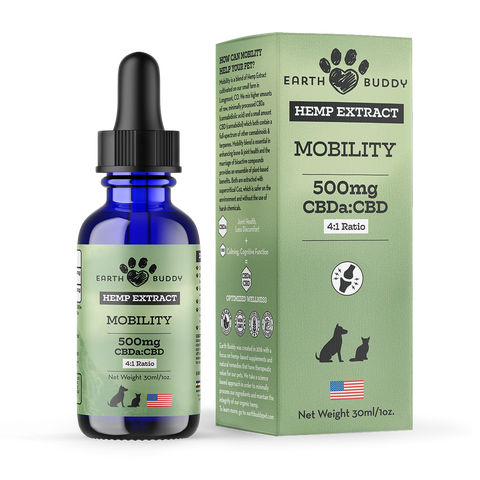
CBDa (cannabidiolic acid) is the raw, unheated form of CBD found in the living hemp plant. Because it skips the heat step most extracts go through, it reaches the body differently, and in research it binds more readily to receptors tied to comfort, mood, and a healthy inflammatory response. For dogs and cats, CBDa is most often used for joint comfort and everyday mobility. In a real-world mobility study we ran with more than 30 pets, owners using our Mobility Hemp Extract (a 4:1 CBDa:CBD tincture) reported easier movement and better comfort and mobility scores on validated, owner-reported indices over the study period. CBDa pairs well with CBD, glutathione, and traditional joint ingredients, and it is designed for consistent daily use.
What is CBDa?
CBDa (cannabidiolic acid) is the raw, acidic form of CBD that the hemp plant actually makes. As hemp matures, its flowers and trichomes fill with CBDa, not CBD. CBD only shows up later, after heat converts CBDa through a process called decarboxylation. Apply heat through a high-temperature process, and CBDa turns into CBD. Skip the heat, and you keep the CBDa.
That distinction is the whole point of how we make our CBDa products. We extract with subcritical CO2, a lower-temperature method that pulls the full range of plant compounds without cooking the CBDa into CBD. Most extraction methods, including supercritical CO2 and solvent-based processes, run hot enough to convert or strip CBDa out entirely. Ours is built to leave it intact.
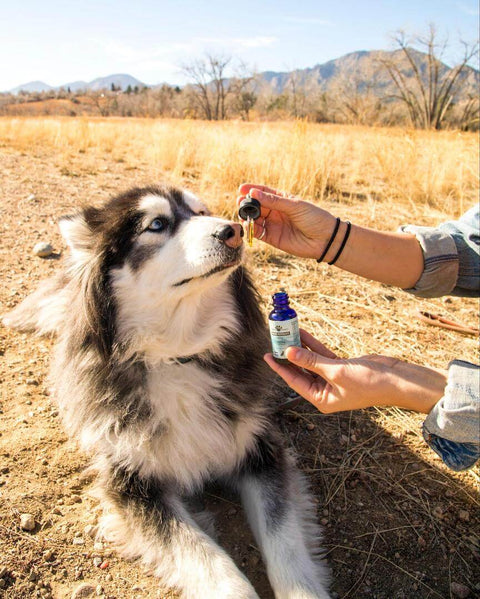
CBDa vs CBD: What's the Difference?
CBD and CBDa come from the same plant, but they are not the same molecule. CBD is the heated, finished form. CBDa is the raw precursor. They both work with the endocannabinoid system, but they take slightly different routes to get there.
CBDa has shown a stronger pull toward certain receptors and a more selective action on the COX-2 enzyme (more on that below). Research in dogs has also found that CBDa is absorbed more readily than CBD, and that giving the two forms together increases how much the body takes up and how long it stays active. That is why our CBDa products are never CBDa alone. They are built as ratios, so each form can do what it does best.
Learn more: CBDa vs CBD
Why the Raw, Unheated Form Matters
Every processing step is a chance to lose something. Heat, harsh solvents, and aggressive refinement all strip compounds out of a hemp extract or change their shape. CBDa is one of the first things to go.
By keeping the extract close to its natural state, we hold onto CBDa along with the minor cannabinoids, terpenes, and other plant compounds that work together through the entourage effect. A less-processed extract is also easier for the body to recognize and metabolize, and easier for you to trust, because there is less standing between the plant and the bottle.
How CBDa Works in Dogs & Cats
The Endocannabinoid System (ECS)
CBDa and the COX-2 Pathway
Mood, Serotonin, and the 5-HT1A Receptor

CBDa Benefits for Dogs & Cats
CBDa earns its place for the same reasons CBD does, with a few of its own. Here is where it tends to help most.
Joint Comfort and Everyday Mobility
Calm Without Heavy Sedation
Digestive Motility and Appetite
CBDa for Achy Dog Joints & Mobility: What Our Real-World Study Found
We don't just point to rodent studies. In late 2022 we ran a real-world mobility study with MoreBetter, following 33 pets over several weeks using three validated, owner-reported tools that veterinarians use to track achy joints and function: the Canine Brief Pain Inventory, the Cincinnati Orthopedic Disability Index, and the Helsinki Chronic Pain Index.
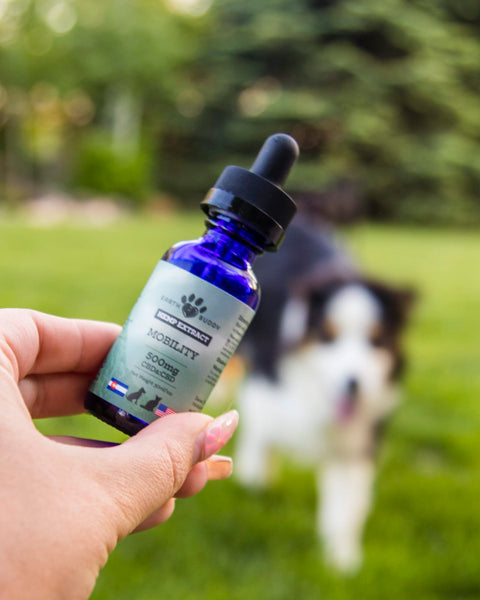
How the Mobility Study Was Run
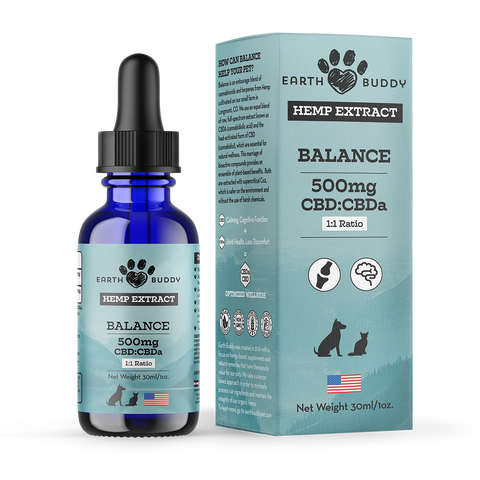
Pets were split between our two CBDa ratios: Mobility Hemp Extract at 4:1 CBDa:CBD, and Balance Hemp Extract at 1:1 CBD:CBDa. Owners scored their pets at enrollment, at a midpoint, and at a final timepoint, using the same three instruments throughout so the numbers stayed comparable.
What Owners Reported on Mobility Hemp Extract (4:1 CBDa:CBD)
By the end of the study, owners using the CBDa-forward Mobility formula reported easier walking, running, jumping, and rising from rest, along with better comfort and quality-of-life scores.
We share this as what it is. The group was small, and the scores came from owner observation in everyday homes rather than a controlled lab. So we treat it as real-world evidence that informed our formulation, not as a guarantee of results. It is one more reason we built Mobility around a CBDa-forward ratio.
CBDa Oil & Products for Dogs and Cats
We build CBDa into three products, each for a different job. None of them rely on CBDa alone, because the research is clear that pairing cannabinoids works better than isolating one.


How Much CBDa to Give Your Dog or Cat

Start Low, Go Slow

Giving CBDa With Food
Is CBDa Safe for Dogs & Cats?
CBDa occurs naturally in hemp and takes less processing to capture than CBD, so the extract stays closer to its natural state, which is generally easier on the body. Every Earth Buddy product is third-party tested at ISO/CGMP-accredited labs, and every batch carries a QR code you can scan to see its actual lab results. We meet the 0.3% THC industry standard, so CBDa will not get your pet high.
As with any new supplement, start low, watch how your pet responds, and talk with your veterinarian first if your pet has a medical condition, is pregnant or nursing, or takes prescription medication. CBDa is not a drug and is not meant to take the place of veterinary care. It is a daily supplement designed to support how your pet feels and moves.
CBDa for Dogs & Cats: Frequently Asked Questions
CBDa is cannabidiolic acid, the raw acidic form of CBD that exists in the hemp plant before it is heated. As hemp matures, its flowers and trichomes fill with CBDa. Apply heat, and CBDa converts into CBD. Skip the heat, and you keep CBDa intact. Earth Buddy uses subcritical CO2 extraction, a lower-temperature process that preserves CBDa instead of converting it away.
CBD is the heated, decarboxylated form. CBDa is the raw, unheated precursor. They engage the endocannabinoid system in slightly different ways. CBDa has shown stronger binding to certain receptors and a different interaction with the COX-2 pathway, and research suggests it can be more readily absorbed than CBD. Many pet parents use them together so each can do what it does best.
CBDa is used most often for joint comfort and everyday mobility. It supports a healthy inflammatory response through the COX-2 pathway, engages serotonin pathways tied to mood and calm behavior, and supports digestive motility and appetite. Because it is minimally processed, the body tends to tolerate it well.
CBDa is one of the most common choices pet parents reach for with stiff or aging joints. In a real-world study we ran, owners using our 4:1 CBDa:CBD Mobility Hemp Extract reported easier walking, running, and rising on validated owner-reported mobility indices. CBDa supports the body's normal inflammatory response and pairs well with traditional joint ingredients like glutathione and omega fatty acids.
Start low and go slow. Begin at the lower end of the label range for your pet's weight, give it consistently for a week or two, and adjust based on how your pet responds. Every pet metabolizes cannabinoids differently, so the right amount is the smallest amount that gives you the result you want. Always check with your veterinarian, especially if your pet takes other traditional therapies.
With food. Giving CBDa alongside a meal, particularly one with some fat, helps the body absorb it and keeps it working in the bloodstream longer. (Some brands recommend an empty stomach. The research on cannabinoid absorption points the other way.)
CBDa occurs naturally in hemp and requires less processing than CBD, so the extract stays closer to its natural state. Earth Buddy products are third-party tested at ISO/CGMP-accredited labs and meet the 0.3% THC industry standard. As with any new supplement, start with a lower amount, watch how your pet responds, and consult your veterinarian if your pet has a medical condition or takes prescription medication.
No. CBDa is non-intoxicating, and our products meet the 0.3% THC standard. CBDa is also less sedating than some cannabinoids, so it supports calm behavior without knocking your pet out.
Yes, and there is a reason to. CBDa can support the bioavailability of CBD, and the two work alongside the other minor cannabinoids and terpenes in a full-spectrum extract through the entourage effect. Our Mobility Hemp Extract (4:1 CBDa:CBD) and Balance Hemp Extract (1:1 CBD:CBDa) are both built on this pairing.
Effects from an oral tincture typically begin within 30 to 60 minutes and last several hours. For joint and mobility support, the bigger gains usually show up with consistent daily use over a couple of weeks rather than from a single dose.
Research Studies
- Rock et al. (2016) - Combined oral THC and CBDa on acute nausea in rat models
- Takeda et al. (2008) - Cannabidiolic acid as a selective COX-2 inhibitory component in cannabis
- Wakshlag et al. (2020) - Pharmacokinetics of CBD, CBDa, THC and THCa in canine serum after three oral forms of hemp extract
- Rock et al. (2017) - CBDa methyl ester and 5-HT1A receptor-mediated suppression of nausea and stress in rats
- AVMA / AJVR - A One Health perspective on comparative CBD and CBDa pharmacokinetics in humans and domestic animals