

Did you know there are more microbes living in your dog's gut than cells in their entire body?¹ Maintaining this microscopic ecosystem is crucial for your pup's health. Read on for ten common signs your furry friend's microbiome could benefit from some probiotic support.
Key Takeaways
- Probiotics are living microbes that provide various health benefits.
- They can help support a healthy gut, which is crucial to your dog's overall health.
- Probiotics can also promote relaxation and support your dog's immune system.
- Common signs your dog might benefit from probiotics include acting stressed, having stomach issues, allergies, losing or gaining weight, and taking antibiotics.
- However, your dog doesn't need to be showing any of these signs for you to consider adding probiotics to their diet.
See Related: 8 Best Natural Antioxidants for Dogs
What Are Probiotics?
Digestive health is a little more complicated than you might think. Our digestive tract is an ecosystem full of living organisms. In fact, there are likely more microbes in your gut than cells in your entire body!²
Maintaining this ecosystem is crucial for healthy digestion and our overall health.
All kinds of animals, including us humans and our dogs, have two general types of microorganisms living in our digestive tracts.
There are healthy gut bacteria, which positively contribute to our gut health. And there are harmful bacteria, which do the opposite.
Probiotics are the former. They are beneficial microorganisms that are believed to contribute positively to the gut microbiome.
In many cases, the microorganisms in probiotics are actually the same as those naturally produced by our bodies (or are very similar).³ Taking these beneficial gut bacteria can have many health benefits, both for us and our dogs.
Benefits of Dog Probiotics
In many cases, probiotics can help restore a desirable intestinal microbial balance. This balance is crucial for your dog's gut health.
For example, research shows that intestinal bacteria (like those found in probiotic supplements) produce short-chain fatty acids, which can in turn be used by cells in the gastrointestinal tract for energy and other helpful purposes.⁴

Gut Health
This is probably the most self-evident benefit of probiotics. The microorganisms in probiotics are carefully selected to support healthy digestion.
For example, one 2021 study gave dogs a synbiotic supplement. Synbiotics are a combination of probiotics and prebiotics (nondigestible food ingredients that support beneficial microorganisms).⁵
The dogs given the supplement were more likely to have solid poops, which are a crucial sign of overall gut health! (We'll explore that more later.)
Other studies have found that probiotic supplements cause measurable and significant changes to the gut microbiome in studied dogs.⁶
Immune Health
Multiple studies have found that probiotics can assist and even enhance the immune system.⁷
Nutrient Absorption
Probiotics supplementation seems to be able to help animals break down foods they otherwise wouldn't be able to digest.⁸ Of course, your dog will ideally be eating a healthy, balanced diet, but you never know what they might snack on while your back is turned!
Certain probiotic strains also seem to improve the absorption of minerals that are crucial to overall health, including calcium, zinc, magnesium, and potassium.⁹
Bonus: What to Do When Your Dog Has a Loss of Appetite

10 Signs Your Dog Would Benefit From Probiotics
Because probiotics have so many potential health benefits, there are all kinds of signs your dog might benefit. We'll cover 10 of the most common signs here.
#1 - Stomach Upset
Let's start with the most obvious sign: An upset tummy. Many dogs experience digestive issues over the course of their lives. Some common signs include difficulty defecating, vomiting, and weight loss.¹⁰
Fortunately, research shows that probiotics can help your dog maintain a healthy digestive tract.¹¹
Colostrum is another excellent supplement that supports digestive health. Our colostrum supplement has grass-fed bovine colostrum, CBD, and organic blueberry powder to help support normal digestive function and relieve occasional gastric distress. Even cats can take bovine colostrum!
#2 - New Home
New people, places, and things can cause your dog stress. Luckily, the beneficial bacteria in your dog's gastrointestinal system can help your dog manage normal stress.
This is because gut microbes are intimately connected with the brain.¹² There has been more research into this connection in humans and rodents than in dogs, but several studies suggest a healthy gut can help promote relaxation.¹³
Of course, the gastrointestinal tract is far from the only way to help a stressed dog. CBD has been shown to help dogs manage normal stress, which is why we offer a variety of calming products infused with hemp-based ingredients.¹⁴
#3 - Stressed Out
Of course, all kinds of things can stress your dog out. Remember, your dog's stress might seem ridiculous — we know a delivery driver, cat, or vacuum are no threat — but that doesn't make it any less real to them.
Some common stressors for dogs include car rides, the vet, and being left alone. These things are often unavoidable. After all, as much as we love our furry friends, sometimes we've simply got to leave them home alone to get stuff done!
In these situations, you obviously want to help your dog manage these external stressors. We've already discussed the beneficial effects of healthy gut bacteria (and CBD) on mental health.
If you're not convinced, consider this: Studies have found that dogs given a specific gut microbe called BL999 were less likely to show signs of distress when stressed. In fact, they were even more likely to explore a new space!¹⁵
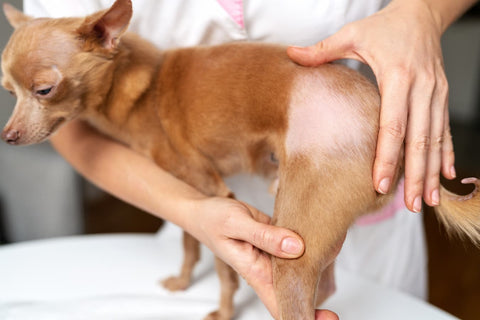
#4 - Allergies
Dogs get allergies just like us. They can be allergic to certain foods, though we'll cover that in a separate section.¹⁶
However, dogs can also be allergic to various things in their environment. Pollen, for example, can cause allergies in some dogs.¹⁷ So can ingredients in certain cleaning products.¹⁸
Allergic reactions can cause all kinds of issues. For instance, in one massive study of 30,000 U.S. dogs, 9% showed signs of skin problems caused by allergens.¹⁹
Fortunately, dog probiotics have been shown to help support pets with seasonal allergies, including seasonal skin allergies.²⁰
If your pooch is already displaying signs of an allergic reaction, consider grabbing our Paw & Skin Balm, which combines CBD, organic coconut oil, mango butter, and beeswax to soothe skin-related issues associated with seasonal allergies. We also recommend using our Gut Health Supplement or our Immunity Mushroom Supplement for this issue, too.

#5 - New Dog Food
Different types of good bacteria specialize in breaking down different foods.²¹ If you've switched your dog's food, their gut microbiome may not be optimized for the ingredients in the new food.
Giving them a probiotic supplement can help support healthy digestion as your dog adapts to their new dinner.
#6 - Overweight
Weight gain is surprisingly common in dogs. Almost six in every ten dogs are overweight, and that figure seems to be increasing.²²
Then again, perhaps this isn't so surprising. After all, dogs are famous for their love of food.
Still, as cute as a food-motivated or chunky dog can be, all that extra weight isn't great for your pet's health. In fact, one study found that overweight dogs lived an average of 2.5 years less than dogs with a healthy body weight.²³
That's no good. Fortunately, studies also show that probiotics can support weight loss.²⁴
#7 - Balance Unhealthy Diet / Foods
In an ideal situation, your dog will enjoy a healthy, balanced diet. But sometimes our situation is far from ideal.
For example, you may have recently adopted a dog that was fed an unbalanced diet. Or maybe your dog got lost and went some time without a proper meal.
Equally, your otherwise pampered dog could have snuck a bite of something they really shouldn't have eaten. Unfortunately for them — and us pet owners — this can cause an upset stomach.
Whatever the situation, research suggests dog probiotics can help our furry friends bounce back from suboptimal eating.²⁵
If you think your dog has eaten something toxic, make sure to take them to the vet. They'll be able to help you and your furry friend.
#8 - Loose Stool
As dog owners, we are responsible for their poop. It's one of the less glamorous aspects of being a pet parent, but it's a necessary responsibility.
The only thing that's worse than cleaning up healthy dog poop, however, is cleaning up less than healthy dog poop. An upset stomach can cause your dog's feces to become loose and harder to clean.
Of course, all this is likely unpleasant for your dog as well. All the more reason, then, to try giving them some probiotics! Research shows they can help support normal bowel function.²⁶

#9 - Health Problems
We'd all prefer to remain healthy. Unfortunately, life often has different plans. Research by the Dog Aging Project shows that 75% to 80% of dogs will deal with some kind of health issue over the course of their lives.²⁷
We've discussed how probiotics have been shown to support a healthy gut.²⁸ But research also shows that probiotics can help dogs with other kinds of health issues, too.
For example, one survey in 2021 of multiple studies concluded that "probiotics might promote the health and well-being of healthy dogs.”²⁹
One of the ways probiotics seem to help is by supporting and even enhancing the immune system response.
Another way probiotics can help promote health is by reducing the prevalence of bad bacteria in the GI tract.
#10 - Antibiotic Treatment
Antibiotics don't discriminate between good and bad bacteria. As such, they can disrupt the microbes in your dog's digestive system.
The live cultures in probiotic supplements can help replace those lost beneficial bacteria and generally support overall digestive health.³⁰

Conclusion
Probiotics have all kinds of potential health benefits. They can support GI tract health, of course, but also overall health.
Your dog doesn't necessarily need to display any of the signs above for you to consider adding probiotics to their diet. After all, an ounce of prevention is worth a pound of cure, as the old saying goes.
Probiotics can also be used in conjunction with other supplements for gut health and overall health, like CBD and colostrum.
Keep Reading: Anandamide: What Are the Benefits of This Cannabinoid?
-
Frequently Asked Questions About Probiotics for Dogs
What's the difference between probiotics and colostrum for dogs?
Probiotics are live beneficial microorganisms that colonize the gut and support the existing microbiome. Colostrum is a bioactive whole-food compound, the first milk produced after birth, that contains immunoglobulins (IgG), growth factors, and proteins that support gut barrier integrity and immune function. They work through different mechanisms. Probiotics seed and support the microbial population. Colostrum fortifies the gut lining itself and delivers immune proteins the body can use directly. For dogs with ongoing digestive challenges, combining both approaches tends to produce better results than either alone. For a full breakdown of what colostrum does and how it's sourced, see our guide to [bovine colostrum for pets].
Can I give my dog probiotics and colostrum at the same time?
Yes. The two work through different pathways and complement each other well. Probiotics support the microbial balance in the gut. Colostrum supports the physical gut barrier and delivers immunoglobulins that help the immune system function normally. Giving both together is a reasonable approach for dogs with food sensitivities, loose stool, or post-antibiotic recovery. Our Gut Health Colostrum for Dogs & Cats combines grass-fed bovine colostrum (14% IgG) with full-spectrum CBD Kief and organic blueberry powder, so it stacks naturally alongside a separate probiotic.
How long does it take for probiotics to work in dogs?
It depends on what you're addressing. For acute issues like loose stool after a diet change or antibiotic course, many pet parents notice firmer stool within 3 to 7 days. For longer-term goals like immune support, weight management, or seasonal allergy support, expect 4 to 6 weeks of consistent use before drawing conclusions. The gut microbiome doesn't shift overnight. Understanding [how long it takes a dog to digest food] can give you useful context for how quickly supplements move through the system and begin influencing the gut environment.
Are probiotics safe to give dogs every day?
For most healthy dogs, yes. Probiotics are living organisms that naturally belong in the gut ecosystem. Daily use supports a stable, balanced microbiome rather than creating dependency. The goal is consistency, not occasional dosing. If your dog is immunocompromised or on prescription medications, check with your vet before starting any new supplement.
What's the difference between probiotics and prebiotics?
Probiotics are the live beneficial microorganisms themselves. Prebiotics are the non-digestible fibers and compounds that feed and sustain those microorganisms. Think of probiotics as the seeds and prebiotics as the fertilizer. Some supplements combine both, which is called a synbiotic. Research on dogs given synbiotic supplements has shown measurable improvements in stool consistency and gut microbiome diversity. If you're evaluating a probiotic product, check whether it also includes a prebiotic component. The combination tends to be more effective than probiotics alone.
Can probiotics help dogs with food sensitivities?
There's meaningful supporting evidence here. The gut microbiome plays a direct role in how the immune system responds to food proteins, and an imbalanced microbiome can make food sensitivity responses more pronounced. Probiotics help maintain a more stable gut environment, which may support a calmer immune response to dietary triggers. For dogs with known seasonal or food-related sensitivities, probiotics are worth including as part of a broader gut health strategy. They're not a replacement for identifying and removing the offending ingredient, but they can support the gut's overall resilience in the meantime.
Do dogs need probiotics if they already eat a healthy diet?
A healthy diet is the foundation, and for some dogs with a robust, stable gut microbiome, additional probiotics may not make a noticeable difference. But factors like stress, travel, environmental changes, aging, and even seasonal shifts can disrupt gut balance even in otherwise well-fed dogs. Probiotics function as a form of proactive gut maintenance, not just a corrective tool. Your dog doesn't need to be showing signs of a problem to benefit from consistent probiotic support. For dogs with a history of digestive sensitivity or immune challenges, daily use makes more sense than waiting for an issue to appear.
What should I look for when choosing a probiotic supplement for my dog?
If you're looking specifically for a probiotic, focus on named strains (e.g., Lactobacillus acidophilus, Bifidobacterium animalis) rather than vague "probiotic blend" language. Different strains do different things. Check for a disclosed CFU (colony-forming unit) count and some indication the organisms survive digestion, whether that's spore-forming strains, enteric coating, or proper storage guidelines. Third-party testing for potency and purity matters here the same way it does for any supplement.
Earth Buddy doesn't make a standalone probiotic, but our Gut Health Colostrum for Dogs & Cats works through a complementary pathway. Colostrum supports the gut lining directly with immunoglobulins (14% IgG concentration) while probiotics populate the microbiome. The two pair well together. If your dog has a specific health concern driving the search, a conversation with your vet about strain selection is a smart step before committing to a product.
-
Sources
- The microbiota of healthy dogs demonstrates individualized responses to synbiotic supplementation in a randomized controlled trial | Animal Microbiome
- Influence of Foods and Nutrition on the Gut Microbiome and Implications for Intestinal Health - PMC
- Probiotics: Usefulness and Safety | NCCIH
- Gut Probiotics and Health of Dogs and Cats: Benefits, Applications, and Underlying Mechanisms - PMC
- The microbiota of healthy dogs demonstrates individualized responses to synbiotic supplementation in a randomized controlled trial | Animal Microbiome
- Characterization and Functional Test of Canine Probiotics
- Gut Probiotics and Health of Dogs and Cats: Benefits, Applications, and Underlying Mechanisms - PMC
- Probiotics and Their Role in Canine and Feline Gastroenterology - WSAVA 2016 Congress - VIN
- Probiotic-driven advancement: Exploring the intricacies of mineral absorption in the human body - ScienceDirect
- Prevalence of common canine digestive problems compared with other health problems in teaching veterinary hospital, Faculty of Veterinary Medicine, Cairo University, Egypt - PMC
- Gut Probiotics and Health of Dogs and Cats: Benefits, Applications, and Underlying Mechanisms - PMC
- Stress & the gut-brain axis: Regulation by the microbiome - ScienceDirect
- Gut-Brain Axis Impact on Canine Anxiety Disorders: New Challenges for Behavioral Veterinary Medicine - PMC
- New study shows cannabidiol (CBD) is effective at reducing stress in dogs | WALTHAM
- The power of probiotics | Cornell University College of Veterinary Medicine
- Food allergy in dogs and cats; current perspectives on etiology, diagnosis, and management in
- Pollen Allergies in Humans and their Dogs, Cats and Horses: Differences and Similarities - PMC
- Managing exposure to cleaning products in cats and dogs
- Pollen Allergies in Humans and their Dogs, Cats and Horses: Differences and Similarities - PMC
- Microbiota and probiotics in canine and feline welfare - PMC
- Influence of Foods and Nutrition on the Gut Microbiome and Implications for Intestinal Health - PMC
- 2022 — Association for Pet Obesity Prevention
- Study finds overweight dogs live shorter lives | American Veterinary Medical Association
- Probiotics Promote Weight Loss in Obese Dogs | ASM.org
- Influence of Probiotic Supplementation on Health Status of the Dogs: A Review
- Gut Probiotics and Health of Dogs and Cats: Benefits, Applications, and Underlying Mechanisms - PMC
- Lifetime prevalence of owner-reported medical conditions in the 25 most common dog breeds in the Dog Aging Project pack
- The microbiota of healthy dogs demonstrates individualized responses to synbiotic supplementation in a randomized controlled trial | Animal Microbiome
- Influence of Probiotic Supplementation on Health Status of the Dogs: A Review
- Influence of Probiotic Administration in Canine Feed: A Comprehensive Review - PMC
–
Earth Buddy is an environmentally conscious and family-owned company dedicated to providing natural solutions for pets. From our CBD oils to our colostrum supplements, our products are designed to promote calmness and encourage relaxation for our furry friends. To learn more and stay connected, follow us on Facebook, Instagram, LinkedIn, YouTube, and Pinterest.



Comments (0)
There are no comments for this article. Be the first one to leave a message!